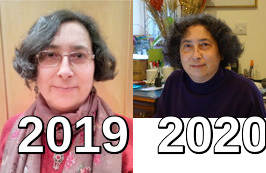
Saturday, 30 May 2020

Coronavirus diary: recipes

I baked, cooked and experimented recipes extensively during the lockdown. It was a way to keep me busy and cheer me up making and eating good food. I mainly made new cakes, pastiera for Easter, bread, pizza but also jams. I prepared more elaborated meals with lasagne, gnocchi, pasta amatriciana and puttanesca. I have good neighbours with whom I exchanged recipes and cakes, leaving our things on the front door. I had a go at the Royal Easter biscuits as well, a fantastic recipe, but could not make them as beautiful as in the official pictures, here is the link: https://www.royal.uk/royal-easter-biscuits-recipe


Bread with olives

You need: 500 g of strong flour or bread flour; 200 ml of lukewarm water, one tsp of salt, 7 g of dried yeast, 20 pitted black olives and 20 pitted green olives, two tbsp. of extra virgin olive oil.


Mix all the ingredient and knead the dough. Let it rest in a warm place for 2-3 hours covered with a wet tea towel. Knead it again and form small breads, then place them in a greased oven tray and bake at 200°C for half an hour.

Pane azzimo (unleavened bread)

You need: 200 g of plain flour (or self-raising flour if you wish to have a softer result), 150 g of wholemeal flour or other alternative flours (such as rice flour, buckwheat flour, hazelnut flour, or spelt flour), 200 ml of lukewarm water, two tbsp. of extra virgin olive oil, salt, one egg to brush the top.


Mix all the ingredients and knead the dough. Let it rest for one hour then prepare sort of round pancakes. Set them on a greased oven tray and make some holes on the top with a fork. Brush the top with a beaten egg and bake at 180°C for half an hour. For a sweet version add 100 of Demerara sugar instead of salt.

Panzanella

This is a simple and tasty recipe from Tuscany. It was also called ‘pan lavato’ (washed bread) as the main ingredient is stale bread soaked in water.  Originally it was the peasants’ lunch or poor people’s food made with bread and the vegetables they had in their garden, such as tomatoes, onions, cucumbers and basil. They also added salt, oil and vinegar.

To make panzanella you need to soak some bread in water, better if stale bread, and crumble it. Add the vegetables cut in small pieces, extra virgin olive oil, some drops of vinegar and salt. Mix and chill it for one hour before serving.

Flower biscuits with marmalade juice

I had some left over of marmalade juice from the marmalade I made in winter, so I decided to use it. But you can use whatever syrup you have and like.


You need: 300 g of rice flour, two eggs, 70 g of caster sugar, 150 ml of marmalade juice, 70 g of melted butter, 1 tsp of bicarbonate of soda.

Mix all the ingredients and knead the dough. Let it rest for half an hour then roll it out. Cut the biscuits with a biscuit cutter (I used a sakura shaped cutter, that is, cherry blossom, I bought in Japan). Bake the biscuits on a greased tray at 180°C for half an hour.

Cake with marmalade juice

You need: 150 g of rice flour, 150 g of sponge flour, three eggs, 100 g of golden granulated sugar, 3 tbsp. of canola oil or sunflower oil, 150 ml of marmalade juice (or another syrup), two tsp of baking powder, one tsp of bicarbonate of soda.


Beat the yolk of the eggs with the sugar, add oil and flours together with the baking powder and bicarbonate of soda. Whip the whites stiff and add them to the mixture. Pour the mixture in a greased cake tin and bake at 180°C for half an hour or forty-five minutes. Decorate it with melted dark chocolate and sprinkles.

Rhubarb and ginger jam

I found rhubarb at the greengrocer’s and couldn’t resist trying to make jam. I added ginger as I think the two flavours match well.


You need: 400 g of rhubarb cut in 2 cm pieces, 50 g of glacé ginger, 500 g of sugar, half a tsp of grated ginger, zest and juice of one lemon.

Grind the lemon zest with the sugar in a blender. Add all the other ingredients and set the mixture over a medium heat in a pan. Bring to boil and cook it until the rhubarb is soft. Store in clean jars.

Enjoy!


Saturday, 16 May 2020

Coronavirus diary: staying at home


Just before the lockdown, my work at UCA Farnham stopped. My husband, I and my third son were all at home for four weeks they said, but I felt that it was an indefinite period that might go on through the summer. My husband was very busy teaching his lessons and meeting his colleagues online. My son, after a first period of cancellations of all activities, courses and meetings, had some online interviews. I concentrated on supermarket shopping at first. I did not have the intention of doing bulk storage or obsessing over panic-buying as I could find almost everything I needed, but I was bewildered when I saw the shelves almost empty at Sainsbury’s. No vegetables and fruit, no
toilet paper, no eggs and flour, no yeast, no passata and cans. I had some supplies at home for about a month but I felt uncomfortable all the same. Boz, the local greengrocer, had plenty of fruit, vegetables and eggs. I found flour and passata at the Italian Deli in Horsell and I luckily had yeast for our Sunday pizza and toilet paper for four weeks at least. I felt reassured. Food hopping food became my priority and only distraction as all the other shops were closed. I noticed that the clothes and home aisles at Sainsbury’s were deserted, everybody was shopping only for food. I visited the local Tesco as well from time to time for supplies of biscuits and sweets, and Morrison’s for plants as the plant nurseries were closed. I spent a lot of time cooking and baking both to have something to do and because being at home we ate more and more often. The most important moment of the day seemed to be the evening meal when the three of us met after our daily activities and partial isolation from each other.


I stuck to exercising, half an hour-forty-five minutes cycling per day and twenty minutes’ yoga at 6 pm watching the news. Despite my efforts, I gained two kilos though my target was to lose two, so I need to lose four kilos now. I think it was too much chocolate, biscuits and cakes. So, after a few weeks I made up my mind to reduce sweets to one piece of cake in the morning and only one biscuit or small piece of chocolate with my tea break in the afternoon. I also reduced my portions and am waiting for some results in the long term. During the day, I alternated my academic work on my PhD thesis to my writing (reviews, poems and articles) and to some paintings. I wished to develop the sketches I had made in Japan but my mind was obsessed with the pandemic so I gave up and painted coronavirus instead. 


In the end, I realised I tended to follow some patterns: academic work in the morning some writing, a short tea break at 11 am, lunch, watching Bargain Hunt and the news at 12,30-1 pm, sometimes a phone call to friends and relatives. Then more work in the afternoon, if I still had some energy and concentration, then cycling, setting up the dinner and I finally watched the 6 pm news while doing my yoga practice. After dinner I was too tired to do any more work so I watched TV and did my crochet or sewing. My favourite programs on the BBC are detective stories like Agatha Christie’s Poirot, Midsomer Murders, Lewis, DCI Banks and Scott and Bailey. On the Italian TV we watched the news every day at 7 pm, some history programs and Italian-style comedy films. I also like Bella da morire (drop-dead beautiful), a mini-series with Cristiana Capotondi who plays the role of a tough police inspector determined to solve stories of violence against women. On the Italian Paramount channel, they broadcasted Sherlock’s season four and five and Inspector Morse.

I spent much more time than usual on Facebook and Twitter posting pictures, thoughts, quotes and updates. It was a way to keep in touch with my friends as well, commenting on their links and putting likes. I also put some stuff on sale on Facebook Market place and managed to sell two items before the lock down: two sets of kangaroo shoes and a table football.

After two weeks the supermarket shelves were restocked though flour and yeast were still missing. Luckily I found some flour at the Italian Deli and made yeast with ‘pasta madre’ (sourdough) from a recipe my mother in law sent me. It took about two weeks to make it as it is a long process. I started with flour and lukewarm water I mixed and kneaded it, then stored in a warm place covered with a wet tea towel. I ‘refreshed’ it with more water and flour every 24 hours for five days then every 12
hours throwing away the upper part which is usually sour and crusty. When it was ‘mature’, that is, when it doubled its size and didn’t smell sour, I stored it in the fridge and used half of it to make pizza, leaving the rest in the fridge after refreshing it again with more flour and water. It worked, and I can use pasta madre for months maybe years. This is the way women made bread in the past when yeast was not sold in shops or supermarkets.

Of course we couldn’t visit my autistic daughter Valentina at Fullerton school near Doncaster. We skyped with her once a week and I sent her some parcels with sweets, clothes and our picture. Sometimes she was unsettled but other times she was cheerful and happy to see us.  We sent each other kisses and hugs through the screen. I also sent a parcel to my son and daughter in law in Leeds with Easter eggs, floor, Italian pasta, rice and two crocheted pot holders I made. The postage cost more than the content.

While I was at home, I stopped wearing earrings at first but still combed my hair. I wore my pyjamas until 9.30-10.00 pm then put on a track suit bottom and loose t-shirt. Then I decided to have a bit of improvement. I went back to earrings, three per ear, matching them with some nice tops with flowery patterns. I still kept the comfortable track suit bottom though, wore warm socks at home and combed and straightened my hair. I took off my rings after a while as my fingers had swollen from all that washing hands and kneading dough.

Going to the supermarket was the most exciting experience during the lockdown, so I put on a nice dress or jeans with a belt with a big buckle cowboy style and loose colourful shirts. I even wore make-up, bought new lipsticks and put them on at home. It was a way to cheer me up and survive in such a stillness. Some people in Italy called it a period of ‘emptiness and plenty’. The emptiness of streets and squares and the houses full of people forced to stay at home. The emblem of this emptiness in Rome is St. Peters’ square, deserted when the Pope speaks. But we need to face this emptiness looking at a better future that will be built on this vulnerability, constructing creatively, fiercely surviving despite the silent killer. It is excruciating to hear from the news how many people are still dying, especially doctors and nurses who give their lives to help others. I liked what the Pope and the Queen said during Easter time. They said what we all needed to hear in a direct essential way. I also like Tom Moore’s motto: tomorrow will be a good day. Hopefully.

Saturday, 2 May 2020

Coronavirus diary: the beginning

For me, the beginning of the coronavirus crisis was in Italy where part of my family lives. On the Italian TV they have been speaking about Covid-19 since February. The government said that Italian people did not need to worry as the National Health Care (Servizio Sanitario Nazionale) was prepared to face it. When people started to die they said they were elderly or already sick people. But then the situation got worse and out of hand, especially in the north of Italy, in Lombardia. Here is an article I wrote for Woking Writers Circle giving my view of the situation in Italy, Japan and the UK: Coping with COVID-19 in the UK, Italy and Japan: a comparison


Travelling to Japan at the beginning of March, I could feel the change. Airports were almost deserted and there were a lot of empty seats on the plane. There was a lot of space to stretch my legs and place my things. At the check-in desk they did not let me take my crochet stuff on the plane (apparently the hook was a problem), so I bought six water-soluble colour pencils at Düsseldorf airport where we changed plane and started to record images on my sketchbook, a sort of travel journal. I drew the Gucci bags I saw at Heathrow duty free shop centre, the Japanese masks of kabuki theatre from the intriguing ANA airlines safety video (https://www.youtube.com/watch?time_continue=51&v=T0Zkey8LMHU&feature=emb_logo ) and magazine covers in Düsseldorf with Covid-19 headlines. Once in Tokyo, I made sketches of photos I took downtown and kimono patterns from the books my daughter had on her shelves. I especially liked the pictures on a book by Sheila Cliffe (https://www.arts.ac.uk/study-at-ual/short-courses/stories/all-about-kimonos-with-tutor-sheila-cliffe-lcf ) where the author wears elegant old and new kimono. She adapted them to her taste with cleverness and expertise. I also made collage pieces using cuttings from Japanese brochures and magazines.


I could finally hug my daughter after a year. My eldest son was already there as we were supposed to attend the graduation of my daughter’s master in fashion at Bunka Gakuen University, but the ceremony could not take place because of the coronavirus emergency. We were there, and we celebrated the achievement all the same. Unfortunately, I had a terrible jet lag. I woke up at two or three at night hungry and sleepless. I locked myself in the toilet with a book or my crochet and waited to feel sleepy again. This didn’t happen until six or seven in the morning when the day began. I felt sleepy from the late morning throughout the rest of the day and fell asleep everywhere I sat down, in the underground, at cafés and restaurants. I couldn’t help it, my eyes closed, I leaned against my husband’s shoulder and had a nap.

The weather was warm, almost spring time and the sakura (cherry blossoms) were starting to bloom. We could not visit museums as they were closed for the pandemic, but we did a lot of shopping at Senso-ji temple and shopping centre and at Solamachi. I bought some beautiful kimono and haori (sort of jackets), Japanese ceramics and two books: The Pillow Book and selected haiku by Masaoka Shiki. My husband and son spent a whole day at Yodobashi Camera department store and Akihabara, places full of games, video games, anime and toys of all kinds and materials, from plastic to wood, paper, metal and fabric. Everything was so diverse, colourful and stimulating, I felt flabbergasted in such a profusion of creativity.
 
We took a trip to Mount Takao. Despite my jet lag, I managed to reach the top, 599 metres, and admire the beautiful view with layers of dark mountains against the blue evening sky. We took the easiest trail going up but going down my son opted for the hardest one across the forest. It wasn’t easy for me because my shoes had no slip grip but I managed to reach the end. Luckily the last bit had a cable car connection.


We had some problems with our flight back, as I explain in my article, but we eventually reached the UK safely. On the plane back home, I read The Pillow Book and the haiku. I also listened to relaxing music and watched Parasite, the film that won the best foreign film Oscar 2020. It was funny, cracking at first, but harrowing and hyperreal towards the end. I was mesmerised and shocked at the amount of cruelty that was so easily performed and the aftermath of it.

Back in the UK in the middle of March, I had jet lag again but it lasted only a few days. In Italy the lock down had started. We were supposed to fly to Rome for Easter but the flight was cancelled. All the events I had booked in the UK were cancelled as well and the conference I was supposed to attend in Canada was postponed to next year. My husband’s school was temporarily closed, so he started teaching online. I felt vulnerable, in an indefinite position of possible danger though everything looked normal outside. The weather was gorgeous; nature was inexplicably blooming as if nothing was happening. In Italy my family was all right though the death toll was getting higher and higher especially in the north of the country. And then the UK lockdown began.


Sunday, 5 April 2020

Recipes for a tasty Easter break plus yeast tip

Despite shortage of supplies because of the panic-buying caused by coronavirus emergency, I managed to find some products at the supermarket that prompted new recipes. Eggs and flours were out of stock for a while, as well as toilet paper, but I had some limited stock at home so I could have fun and mess about in the kitchen as usual. Yeast was a problem at a certain point but my mother in law told me to use a tbsp. of lemon juice and a tea spoon of bicarbonate of soda instead of dried yeast to make pizza. The result is not exactly the same but good enough.


I experimented with Morello cherries and coconut flour making cakes, biscuits and panna cotta. Here are the recipes:

Morello cherries biscuits

You need: 250 g of self-raising flour, four tbsp. of canola oil or sunflower oil, 100 g of golden caster sugar or Demerara, 50 g of morello cherries, one egg.


Soak the cherries in some liquor mixed with water. Beat the egg with sugar then add the flour and canola oil. Finally add the cherries plus part of the liquor. Let the dough rest for half an hour then roll it out. Cut the biscuits with a biscuit cutter (I used biscuit cutters inspired by Easter shapes) and place them on a greased tray. Bake for 15-20 minutes at 180° C. if you wish you can decorate the biscuits with melted chocolate, icing sugar and coloured sprinkles to make them look spring-like.

Panna cotta with morello cherries

You need: 500 ml of double cream, 250 ml of milk, 150 g of sugar, 50 g of morello cherries, one sachet of vanillina or some drops of vanilla essence, 13 g of gelatine leaves.


Soak the gelatine leaves in cold water and the morello cherries in liquor mixed with water. Cook the cream plus milk, sugar and vanillina on the hob until it boils. Remove it from the hob, squeeze the gelatine leaves and add them to the cream mixture and blend it in a blender. Finally add the morello cherries and pour the mixture in a slightly greased Tupperware container. Chill it for three hours at least before serving.

Donut cake with morello cherries

You need: 100 g of rice flour, 150 g of sponge self-raising flour, two eggs, 80 g of melted butter, two tsp. of baking powder, one tsp of bicarbonate of soda, 80 g of morello cherries, 130 g of golden caster sugar; to decorate: strawberry white chocolate and sugar flowers.


Beat the yolks with the sugar, add the flour, the melted butter, the baking powder plus bicarbonate of soda and the cherries with the liquor. Whip the whites stiff and add them to the mixture as well. Pour the mixture in a greased donut tin cake and bake for half an hour-45 minutes, or until it is ready, at 180° C. When it cools, microwave the white chocolate and spread it on the top then decorate with sugar flowers.

Coconut cake

You need: you need: 150 g of coconut flour, 200 g of sponge self-raising flour, two tsp of baking powder, one tsp of bicarbonate of soda, four tbsp. of canola oil or sunflower oil, three eggs, 150 g of icing sugar, 80 g of glacé ginger, 200 ml of coconut milk; to decorate: apricot glaze, coconut flakes, sprinkles.


Mix the yolks with the sugar, add the flours and the oil, plus the baking powder and the bicarbonate of soda. Then add the glacé ginger and the coconut milk. Pour the mixture in a greased tin cake and bake for half an hour-45 minutes, or until it is ready, at 180° C. When it cools, spread some apricot glaze on top and sprinkle with coconut flakes and coloured sprinkles. A perfect Easter treat!


Sunday, 15 March 2020

Coronavirus outbreak

Keeping busy: reviews and workshops

The development of Covid-19 in the past few weeks worried me because of my family in Rome. Luckily my mum is fine and my sister too. They stay at home as schools and shops are closed except for supermarkets and pharmacies. They are following all the rules the Italian government has recommended. I contact them through WhatsApp and Facebook every two days. My mum is lively as usual. Speaking of coronavirus regulations, she mentioned Mussolini’s motto, obbedire, credere e combattere (obey, believe and fight), with a belligerent stare. I had a good laugh as it sounds quite exaggerated and funny in coronavirus context. My sister is all right. Her school is closed and she is teaching distance learning at the moment. Her husband works in a hospital and is in contact with people infected but they have strict measures to follow and protect themselves from the virus. I cancelled my holiday in Italy during the Easter break and am planning to visit Italy but not before the summer. It will be hard not to see my family until July or August but the emergency is too serious, hopefully it will pass.


Despite this, the poetry environment I regularly attend in Woking area is very busy, though a bit affected by the pandemic. There are monthly readings at The Lightbox the last Thursday of the month and at The Keep in Guildford the first Monday, plus occasional readings and showcases at the Poetry Café in London and at Cranleigh Arts Centre. Then there is the Stanza group at the Maybury centre on the third Tuesday and the Woking Writers Circle meeting on the Third Thursday. I try to attend every event but sometimes other things overlap and I feel so tired in the evening that I prefer to stay at home. Attending poetry readings fuels my writing as I cannot always read the same poems so I need to write new ones. At a reading, Dónall Dempsey gave me an exercise book some time ago; it belonged to his sister. It is called Aisling, visions in Irish, and it is inspiring me to write with its turquoise cover spotted with bright leaves and the ruled pages.  At the moment I am mainly writing about cooking connecting it with family relationships and states of mind. I also published a few poems here:


My proposal on The Testaments by Margaret Atwood has been accepted at the conference organised by Accute in London, Ontario. I will attend the conference and present my paper in June, exciting! For the occasion, I decided to spend the whole month of June in Canada. I am planning my journey which will be focused on my research on Atwood’s work but will also give me the opportunity to have a holiday and see my Canadian friends again. I am planning to stay in Toronto for two weeks and study at the university libraries. I will also meet some Atwood scholars at the Department of English Literature at the University of Toronto. After Toronto, I would like to go to British Columbia and will probably meet my friends Pam and Crystal who live in the west. It will be a stimulating experience that will add material to my thesis and to my life journey.

The PhD research is going well. I have four chapters now and am going to complete the fifth chapter soon. I have also part of the introduction done. The maximum word count is ninety thousand words plus or minus 10% leeway. I have about seventy thousand words at the moment, so I think I only need one more chapter to write and complete the introduction plus conclusion. I believe that I will have a good draft by the end of summer. I should end by 2020 or the beginning of 2021.
 
Family things are going well too. My daughter Valentina is moving to Surrey at the end of March. My other daughter has just graduated at Bunka Gakuen University in Tokyo, an exciting experience that gave me the occasion to re-visit Japan. my youngest son is getting ready to spend three months in Nepal with VSO (Voluntary Service Overseas) and my oldest one, who just came to Tokyo as well, is having his good time with his wife in Leeds. Luigi and I stick to our routines and have a bit of fun from time to time visiting museums and exhibitions and going to Southbank concerts. Here are some exhibitions I visited and reviewed:


I also reviewed a few books and wrote some articles, here are the links:


Richard Hawtree, The night I spoke Irish in Surrey: https://londongrip.co.uk/2020/01/london-grip-poetry-review-richard-hawtree/


My review on The blue boob club by Daphne Milne will be published on South 61.

I am busy knitting long long scarves for my daughters and my daughter in law with a nice soft wool I found at Hobby & Craft’s shop. I am also making bags with fabric and crocheted purses to sell at fairs (http://www.carlascaranod.co.uk/?Readings_%26amp%3B_Fairs ) and I am working on new
paintings for spring exhibitions. I gave up embroidering poems at the moment but would like to go back to it as I started a new one some time ago with the famous phrase from The Handmaid’s Tale: Nolite te Bastardes Carborundorum (Don't let the bastards grind you down), in red on a white cloth. I am currently working on a round shaped canvas depicting a painting that combines mandala motif with red autumn leaves. I chose acrylics for the final pieces but I am still working on several drawings using mixed media to find the right composition and colours. The piece will be a mixture of abstract and figurative painting and should convey engagement to a centre in both a loose and controlled way. Maybe too many ideas to fit in one painting.


My Canadian interests brought me to read more books on Canadian culture and literature. Besides Atwood’s work. I am reading Indigenous literature such as the book by Kaitlyn Purcell I reviewed for The Temz Review, an online magazine in Ottawa (https://www.thetemzreview.com/scarano-dantonio-purcell.html ), and the amazing novel Medicine Walk by Richard Wagamese. It is the story on an Indigenous boy brought up in a farm by a foster parent he calls old man. The boy feels the land around him as if it is alive. He knows how to hunt and survive in the wilderness merging with the environment. His biological father, on the other hand, though brave and passionate with adventure, is ruined by alcohol and debauched life. Cultural and physical deprivations mark deeply the father’s life in contrast with the son’s dignity expressed in his simple life despite his young age. The boy wishes to take care of his father in his final days though the father never took care of him. In the novel, the presence of the woods, the land and the animals strikingly combines with humans in a harmony that is not necessarily peaceful but it shows the acceptance of both life and death, fight and surrendering. The tone is factual at times, especially in dialogues and in the descriptions of the work at the farm, and lyrical as well, poetic in some parts. A sense of profound empathy with nature develops throughout the novel; this shapes the Indigenous identity and fosters their dignity whose source is in their own land.

A different novel is Fools Crow by James Welch. It recalls the world of Plains Indians’ life before they were almost wiped off by the diseases brought by Europeans and the slaughtering carried out by the American army.  The attempt to maintain the memory of how this world was and why it is still so relevant for the Indians’ identity is at the core of the story. They show a very different mentality compared to the aggressive and exploiting-targeted western view. The land, intended as plants, animals, rocks and whatever is part of it, is at one with humans, according to the Natives. The land cannot be dominated but acknowledged and understood. Indians are sort of protoenviromentalists and their point of view, which colonisers thought was naïve, is now revealed as visionary in today’s global scenario. The Indians rituals, beliefs and hunting practices are evoked and described in the novel, an epic of a past world that faded and needs to be remembered in storytelling, that is, in language, to maintain its power and ensure identity. The story is centred on the rise of White Man’s Dog who steals horses at first, then becomes a warrior renamed Fools Crow, as he fooled the Crow chief making him believe he was dead then he killed him. The stories are about war, love, revenge and survival. They form the legacy of the Indigenous peoples and testify to their resilience.


Seven Fallen Feathers: Racism, Death, and Hard Truths in a Northern City by Tanya Talaga is a reportage of true stories that happened between 2000 and 2011 in Thunder Bay (Ontario) where seven Indigenous students went missing and were eventually found dead. They lived in a residential school far away from home and suffered persistent casual racism and deprivation that brought to their deaths. The government seemed absent or complicit in its indifference. The white western culture and the Indigenous people are depicted as distant one from the other. This unrelenting attack to Indigenous lives and culture, which started with the arrival of the first European settlers in North America in 17th century, is considered a cultural genocide. It was a real persecution to prevent transmission of Indigenous identity and values. The White Man annihilated them culturally as he could not destroy them completely physically. In Talaga’s work, testimonies mix with dreams, prayers and accusations. She reports that the abuses of residential school (a story that seemed to belong to the 19th century) lasted until the 1960s and the last school was shut down in 1996. Suicides due to deprivation and abuse are still common in Indigenous communities. Young people disappear, especially girls. Five of the seven students’ bodies, the ‘seven fallen feathers’, were recovered in a river. Talaga remarks that:

Indigenous communities continue to lack the basic necessities of life, including clean water, safe housing, working fire trucks, basic health care, and access to education.

The inquest for the seven deaths began in October 2015 and ended in June 2016 but, according to the author, the families did not have any explanation about their children’s death. The jury said that four of the seven deaths were ‘undetermined’ and the other three were killed but they did not know exactly what happened. It seems that Indigenous people are considered second class victims for the police; so, the Indigenous peoples of Thunder Bay often use social network, such as Facebook and Twitter to spread stories of assaults. However, the author mentions some improvements, such as more control due to the installation of CCTV cameras and more funds have been assigned to the high education of the area.

Enthralling readings I enjoyed thoroughly.

Saturday, 29 February 2020

Spring is on the way

I was very happy to go back home after my Christmas holidays in Italy. I had had my break and a good time with friends and family. I was ready to return to my routines and relax for a few days before starting to work again on my thesis and at UCA Farnham. As soon as I arrived home, I unpacked the luggage, did some laundry and reorganised my book shelves, reviewed files, blog posts and knitting work. Cleaning my Fiat 500 was also a priority, and hard work, as it was in miserable conditions probably due to my travelling around Surrey. I caught up with emails and did the supermarket shop as well. I found some cranberries and Seville oranges at the greengrocer’s so I experimented a new cake and made marmalade (recipes here below).

I soon went back to my studies focusing on my thesis and on two presentations I delivered at the end of January. One was at the University of Reading on the Edible woman, Reshaping the body: symbolic anorexia in The Edible Woman by Margaret Atwood, for the Gender and Sexuality Research Network’s Seminar Series; the other one was at the Centre for Myth Studies at the University of Essex on Intertextual references and myths in The Handmaid’s Tale

(https://essexmyth.wordpress.com/2020/01/26/intertextual-myths-handmaids-tale/ ). They were both enthralling experiences with riveting discussions at the end of the sessions that gave me new ideas for my thesis. My article on cannibalism in The Edible Woman was published on the review Exchanges (University of Warwick) in January as well, here is the link: https://exchanges.warwick.ac.uk/article/view/446


We managed to see the pantomime too at the New Victoria Theatre in Woking as soon as we came back from Italy. It was performed according to the best tradition with the ventriloquist, the twelve days of Christmas and the five toilet rolls tossed here and there, usually among the audience, a man
dressed in woman’s clothes (Aladdin’s mother) and Strictly Come Dancing dancer, Brendan Cole. Bobby Davro was amazing; he imitated the voices of celebrities and politicians, including President Trump, and though there were a few weird jokes, it was great fun. I love the way the audience is involved in pantos, it is pure entertainment as it should be, and according to Brendan Cole, Strictly is a panto too. At the end of the story there was a final twist when Aladdin was knocked out by the sorcerer and Jasmine took his place fighting against the villain and winning. Fantastic!

With the new year, I realised that my hair has definitely changed and my body has changed too. I don’t know how, but my hair has become curlier, almost crispy. I thought it was the shampoo or the fact that I go swimming once or twice a week. I changed shampoo and used more conditioner and hair oil but there was no change. Then I thought it was the English weather, particularly humid this year, but when I went to Rome for Christmas for two weeks my hair kept the same shape, only the
hairdresser managed to straighten it. My hair has never been like spaghetti but it was far straighter just a year ago, and I have photos to prove it. Maybe it is that it became thinner with aging. It does not look so bad after all and it fits my face that has become larger; it seems as if I got a perm.

My body has changed too. I get tired more easily and if I want to keep active, I have to balance my activities. Therefore, I do my ‘intellectual work’ in the morning (PhD work and writing) or early afternoon leaving house chores, crafty stuff, knitting and crochet for the late afternoon and evening. Reading, creative writing and reviewing are my happy breaks. My legs and arms are still thin but my waistline has become suddenly larger and though I exercise it doesn’t seem to go back to how it used to be. Finally, my back aches and I have to rest or do some exercises the physiotherapist recommended to ease it. It is not a nightmare but I need to adapt my lifestyle to my new conditions.

I take breaks from time to time from my studies to recharge my brain and also to go back to my thesis with fresh eyes. Starting a new creative project always helps me. Bags, scarves, a new Halloween dress for my daughter Valentina, or granny squares, give me a relaxing interval and fuel my creative side. I work as well as an academic mentor at UCA Farnham, that is, I support students in their research and in delivering their work on time. It is a rewarding job that gives me money and also keeps me in contact with the academic world and with university students.

Lately, I started to draw and paint again attending Chobham art group and Woking Art Society’s meetings and workshops. I have worked with all kinds of media in the past since I was a teenager, from tempera to oil, acrylics, watercolours and mixed media. Since I came to England, I especially developed watercolours and mixed media, which I love, using intriguing new products and techniques. It is a rewarding and relaxing activity that also gives me the opportunity to meet people that share my same interests, but it is a commitment as well that needs focus and dedication on a certain project you decide to carry out. For me at the moment it is mainly drawing and painting leaves and flowers though in the past I also painted shells, stones, still life and landscapes. There will be opportunities for exhibitions in Woking and in Surrey area in spring and summer and I hope I will have enough good pieces to display.


In line with my artwork, I am also planning to take part in art and craft fairs to fund my summer journey to Canada and my son’s fundraising for VSO (Voluntary Service Overseas). He will sell his origami and artwork and I will sell my jewellery, handmade clothes and bags, scarves, knitting and crochet stuff, as well as my artwork. Here are the fairs I am going to attend:

Friday 28th February: Kenley Market, Kenley Memorial Hall, Kenley CR8 5AB, from 8 until 12.

Friday 20th March: Kenley Market, Kenley Memorial Hall, Kenley CR8 5AB, from 8 until 12.

Saturday 25th April: Guildford Guildhall, Guildford GU1 3AA, from 10 until 5.

Saturday 2nd May: Cranleigh Village Hall, Cranleigh GU68AF, from 10 until 4.

You can also find all the information on my website here: http://www.carlascaranod.co.uk/?Readings_%26amp%3B_Fairs

At half term we celebrated my husband and my daughter Valentina’s birthdays. We travelled north where Vale lives, met my eldest son and daughter in law in Leeds and had a cosy party with Valentina in Fullerton. It was great fun. We had prepared a Futurama theme party with pictures of the purple haired Leela and clothes for Vale with Leela printed on. She loved it. She showed off all the clothes and stuck Leela’s pictures on walls and windows. She also drew Lela again and again on a roll of paper and watched Futurama videos. The social services told us they will move Vale south at the end of March in the Redhill area as she is an adult now (she is twenty) and cannot stay in Fullerton any longer. We are happy about the move as she will be nearer to us, about an hour drive, so we can see her more often and spend more time with her.


In Leeds we went to a new pizzeria, Livin’Italy (https://livinitaly.com/ ), an exciting place. We had intriguing cocktails, such as Italian Stallion, Sbagliato, Sardinian Millionaire and Eager Porno Star Martini, and excellent huge pizzas (20”) we shared, and finally delicious artisanal gelato (ice cream). A cool place with superlative food.
 

The weather has been very windy and rainy this year but daffodils and crocuses are poking out as ever and some trees have white and pink flowers defying the gale. The risk of coronavirus lingers which seems worrying (we have planned a trip to Tokyo to see my daughter’s MA graduation at Bunka Gakuen University) but let’s hope that all will end well and spring will come at last with mild sunshine and new treats for this challenging year.


And here are the recipes:

Cranberry cake

You need: 250 g of white flour, 100 g of sugar, 2 tbsp. of cranberry sauce, 80 g of melted butter, 2 tsp of baking powder, 2 eggs, 50 g of dark chocolate chips; to decorate: cranberry sauce and 100 g of melted dark chocolate.


To prepare the cranberry sauce you need to boil the cranberries with some water, Demerara sugar and a stick of cinnamon. For the cake, beat the eggs and the sugar, add all the other ingredients and bake for half and hour-45 minutes at 180°C. When it cools, melt the dark chocolate in the microwave and pour it on top, then add one or two tbsp. of cranberry sauce.

Marmalade

You need: 1 ½ kilo of Seville oranges, 1 kilo of sugar.

Boil the oranges for one hour. Keep half of the water. Peel and scoop the pulp of the orange removing the pith and pips. Chop half of the peels then simmer the pulp, peels and water for 1-2 hours or until it is ready.


Superb!